June Guest Speaker Report
Our June speaker was Rob Evans who owns and runs Pheasant Acre Plants in Llangan, with a talk on herbaceous perennials.
Rob brought a beautiful selection of plants with him and focused on these for the talk, all of which are good for pollinators.
ASTILBES are one of the most underated and easiest to grow of plants. They are very hardy but need moisture to thrive. Varieties vary in height from 18in to 4ft, with a wide range of colours blooming from the beginning of June to the end of August. They are easy to start off, buy bare root plants in the dormant season from November to March. They develop into a clump but are not invasive. To divide, simply put a spade through the mature clump and split into several new plants.
LOBELIA is usually thought of as a bedding plant for pots and hanging baskets but there are lovely perennial varieties available. The flowers are the same shape as the bedding varieties and the tall, starship series are good as cut flowers. Slugs like the lush new growth in spring and Rob recommends using coconut fibre as a mulch around the plants, as it becomes slimy when wet so
slugs find it slippery.
CAMPANULAS are available in a wide range of varieties, some cascade, some are upright but all have the same star shaped flowers. There are 7ft high varieties and shorter, compact, clump forming varieties, flowering from June to August. Cut them back to ground level in winter.
PENSTEMONS are beautiful plants with varieties in a wide range of colours and heights. Rob brought a particularly stunning variety called Onyx and Pearls, with dark stems and white tubular flowers marked with flecks of dark purple. Cut the foliage back by half for the winter as penstemons can be susceptible to frost. When new shoots appear in April, prune to these. Penstemons are easy to propagate by taking soft tip cuttings at this time of year. They prefer full sun.
PHLOX is another reliable perennial with scented flowers in many colours, with heights ranging from 15in to 4ft. They are wind resistant and bloom from mid-June to the end of September. Cut the foliage back to 6in in November. Take root cuttings to propagate new plants. Dig up a mature plant, choose the biggest roots around 2 or 3in long, place in a pot of peat-free compost, and keep moist until new shoots appear. Grow phlox in full sun.
CHOCOLATE COSMOS should be treated like dahlias. Keep in the greenhouse or a cool dry shed over the winter, bring indoors in March, and new shoots will appear. Grow on and plant out in early summer. Many stems can appear on each plant and a 1yr old plant can grow to 2ft. They need deadheading and feeding throughout the flowering season.
ALSTROMERIAS are very striking, colourful plants with strong, straight stems. They are excellent cut flowers but should be pulled, not cut. The roots have got rhizomes so when the flowers are pulled the rhizome generates a new shoot. They prefer to grow in sun but need moisture. They can`t tolerate winter wet so mulch to protect the crowns. Divide in January to produce more plants. Alstromerias flower early in the season, then produce another show in September.
AGAPANTHUS can grow to 5ft although there are shorter varieties growing to just 15in. The flowerheads can be very large. If grown in the garden the roots will gradually spread. Divide by splitting. Container grown agapanthus should be potted up gradually, the new pot being no larger than 2in, and the roots should always be white. Brown roots indicate that the plant is not taking up food. Feed once a month from March to October with a high potash feed. In winter, cut the stems down, the leaves of semi-evergreen varieties will get partly burnt by frost while the leaves of deciduous varieties will die back completely.
As always, Rob`s talk was so informative and having the plants on display ensured we could see for ourselves how beautiful and useful these plants are for our gardens. Many thanks to Rob, and to everyone who attended on a very hot and humid evening. And don't forget, you can visit Rob at Pheasant Acre with our trip in August, details below....
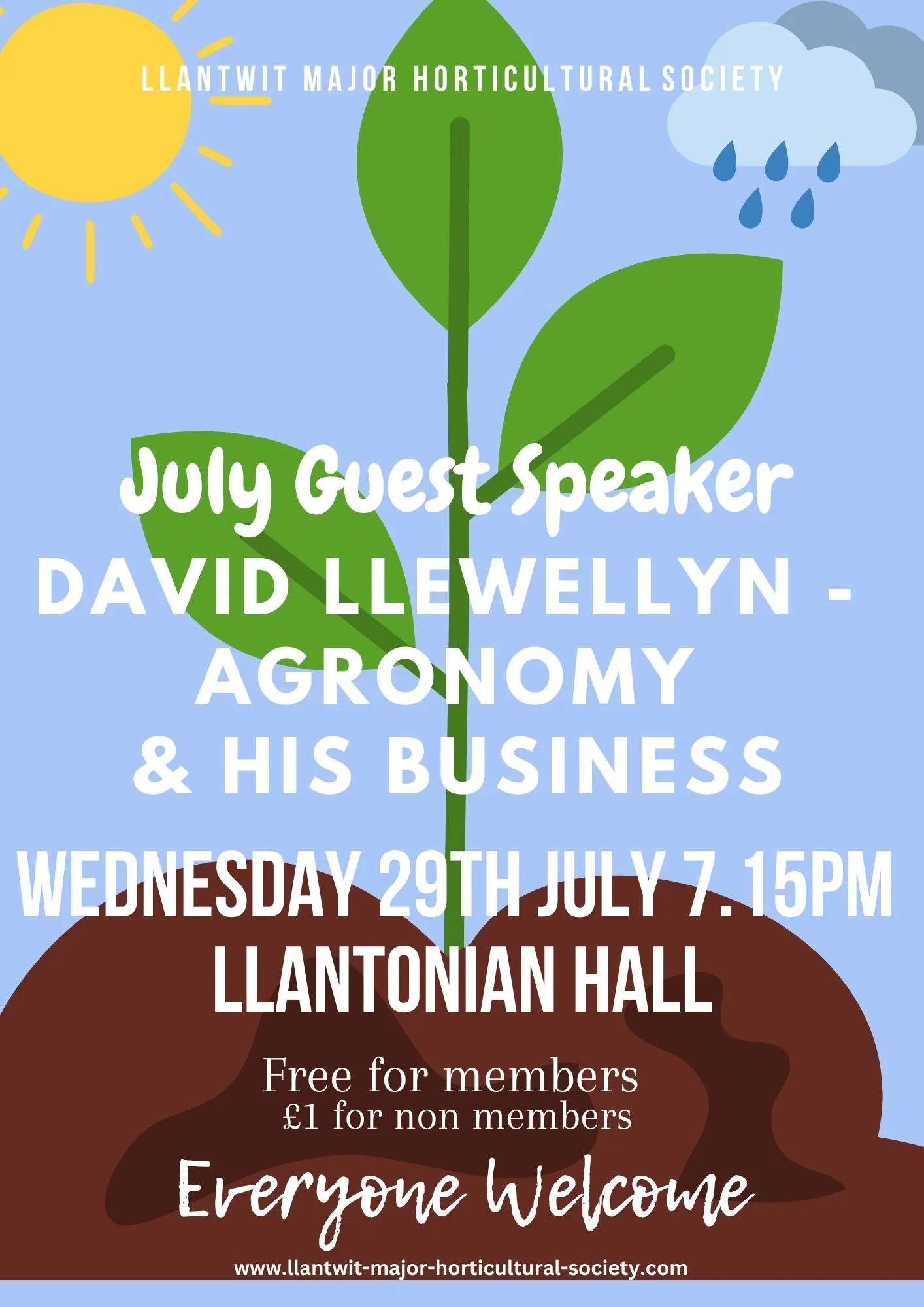
Next month`s speaker is Dai Llewellyn from Agrii, a leading provider of agronomy services, based on Llandow, who will talk about how he set up the business and how they provide expertise and support to farmers across the UK. Everyone welcome on Wednesday 29th July at 7.15pm.